- Mixologist Master
- Posts
- Shaking vs. Stirring: Why It Actually Matters
Shaking vs. Stirring: Why It Actually Matters
It’s not a rule. It’s a technique that changes texture, dilution, and flavor.

Mixologist Master
February 05, 2026 • Estimated Reading Time: 2 minutes

Sips & Synopsis
This Weeks Makings.
“Shaken or stirred?” gets treated like trivia, but it is one of the most important technical decisions a bartender makes.
This week we are breaking down what shaking and stirring actually do to a drink, why the difference matters, and how choosing the right technique can completely change texture, balance, and overall experience.
In this issue:
What shaking and stirring really change
How bartenders decide which to use
A drink of the week that proves the point
Bonus cocktails that highlight both techniques
A zero proof drink where technique still matters
Trivia Question❓
Why did James Bond famously order his Martini shaken instead of stirred?
Answer at the bottom of the newsletter
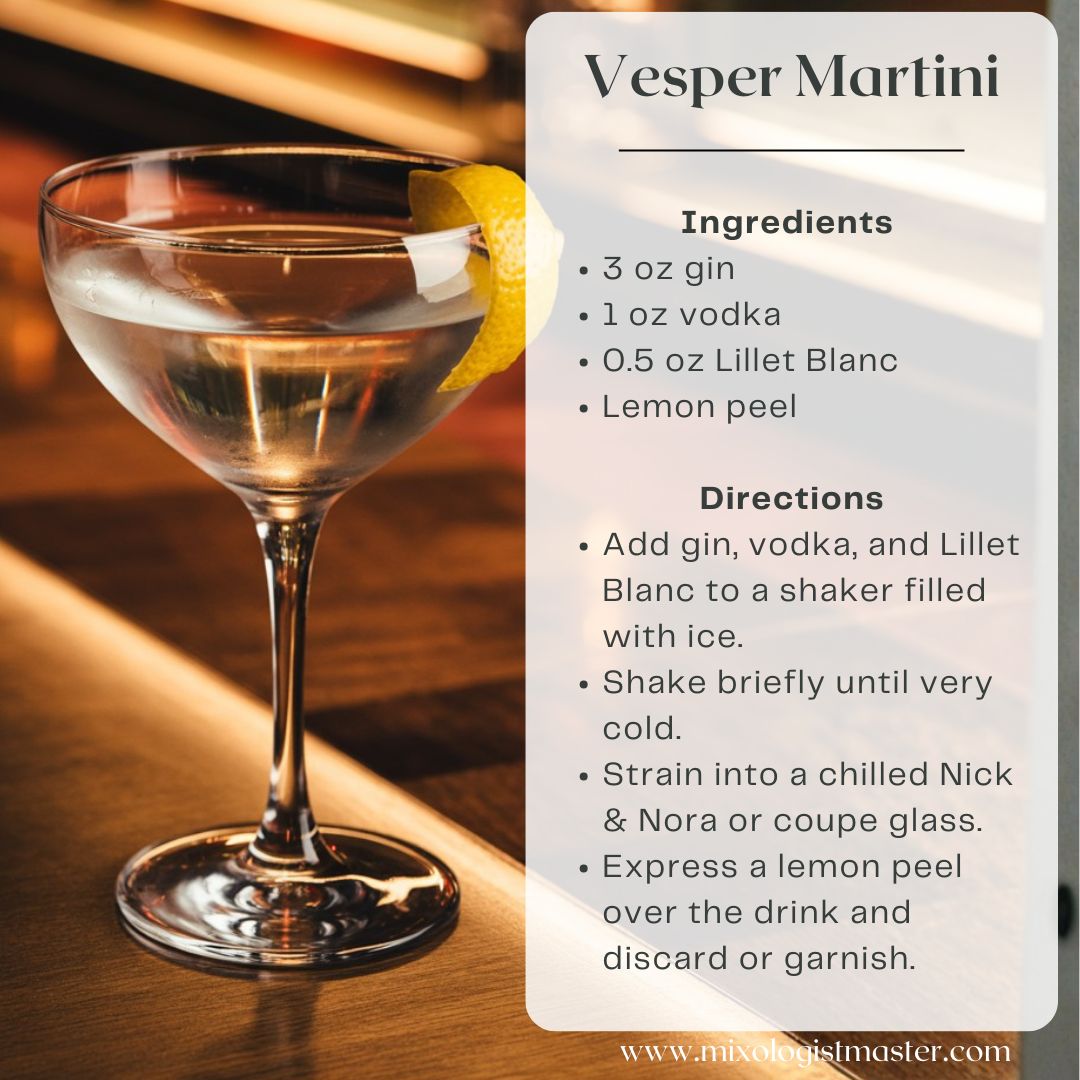
Vesper Martini
A controversial classic that proves technique changes everything.
Ingredients
3 oz gin
1 oz vodka
0.5 oz Lillet Blanc
Lemon peel
Directions
Add gin, vodka, and Lillet Blanc to a shaker filled with ice.
Shake briefly until very cold.
Strain into a chilled Nick & Nora or coupe glass.
Express a lemon peel over the drink and discard or garnish.
Why this drink matters
The Vesper breaks classic martini rules on purpose. Shaking increases dilution and sharpens the drink’s profile, creating a colder, more aggressive martini. Stirring would soften it considerably. This drink shows how technique is a choice, not a commandment.
Shaking vs. Stirring Is About Texture, Not Tradition
Shaking and stirring are not interchangeable. They serve different purposes.
Shaking chills a drink quickly, adds dilution fast, and incorporates air. That aeration changes texture, making drinks feel lighter, brighter, and sometimes slightly frothy. This is ideal for cocktails with citrus, egg white, dairy, or juice. These ingredients need force to integrate properly.
Stirring is gentler. It chills slowly, controls dilution, and preserves clarity. Stirred drinks feel silky and weighty, allowing spirits and fortified wines to remain expressive without added air.
Bartenders make this decision based on what the drink needs, not what tradition says. Citrus needs to be shaken. Spirit forward drinks benefit from stirring. When the technique is wrong, the drink feels off even if the recipe is correct.
At home, many drinks fail because the technique does not match the ingredients. Learning when to shake and when to stir is one of the fastest ways to level up your cocktails.
Tools that support good technique:
Weighted shaker tins for proper aeration
Mixing glass with spout for controlled stirring
Bar spoon designed for smooth rotation
Bonus Cocktails
Classic Martini
The gold standard for stirring.
Ingredients
2.5 oz gin
0.5 oz dry vermouth
Directions
Add ingredients to a mixing glass with ice. Stir until chilled and properly diluted. Strain into a chilled Nick & Nora or coupe glass. Garnish with lemon twist or olive.
Why it works
Stirring preserves clarity and creates the signature silky texture martinis are known for.
Whiskey Sour
A drink that must be shaken.
Ingredients
2 oz bourbon
0.75 oz fresh lemon juice
0.75 oz simple syrup
Directions
Add all ingredients to a shaker with ice. Shake vigorously until well chilled. Strain into a rocks glass over fresh ice.
Why it works
Without shaking, citrus and sugar never fully integrate, leaving the drink disjointed.
"Technique is what allows simplicity to shine."
Mocktail or Zero Proof Option
Shaken Citrus Cooler
Proof that technique matters even without alcohol.
Ingredients
2 oz fresh orange juice
1 oz fresh lemon juice
0.5 oz simple syrup
2 oz chilled sparkling water
Directions
Shake juices and syrup with ice until well chilled. Strain into a rocks glass over ice. Top with sparkling water and stir gently.
💡 Answer to Trivia Question:
Author Ian Fleming preferred the colder, more diluted result. The choice was personal, not a rule of cocktail craft.
🏁 Closing Time
Shaking and stirring are not rules to follow. They are tools to use.
When technique matches intention, even the simplest drink feels deliberate. The next time you reach for the ice, pause and decide what the drink actually needs.
Until next week,
Andrea
*Affiliate Disclosure: As an Amazon Associate, I may earn from qualifying purchases. This means that if you click on an Amazon link in this email and make a purchase, I may receive a small commission at no extra cost to you. Your support helps me continue creating quality content and sharing mixology tips. Thank you!
This content is intended for readers of legal drinking age and is for entertainment and educational purposes only. Please drink responsibly.